




Technical Standards

The Work Beneath the Finish.

Tile installation is an assembly. Every layer — substrate, membrane, mortar bed, setting material, grout, and movement joint — must be specified and installed correctly. The finish reflects what's underneath.

Why It Matters

The Standard Is the Assembly.

Most tile failures originate below the surface — in the substrate, the mortar bed, or the setting material. Understanding the assembly is the foundation of durable installation.

The Installation Standard

The Standard Behind Every Installation.

From substrate condition to ongoing care, each stage contributes to the performance of the finished installation.

Educational poster 01: What's Under the Tile Matters — Maison Tile Co explains why substrate and assembly layers determine installation performance
01

What's Under the Tile Matters.

The visible tile surface is only as durable as the assembly beneath it. Substrate integrity, flatness, and moisture conditions determine whether an installation performs or fails.

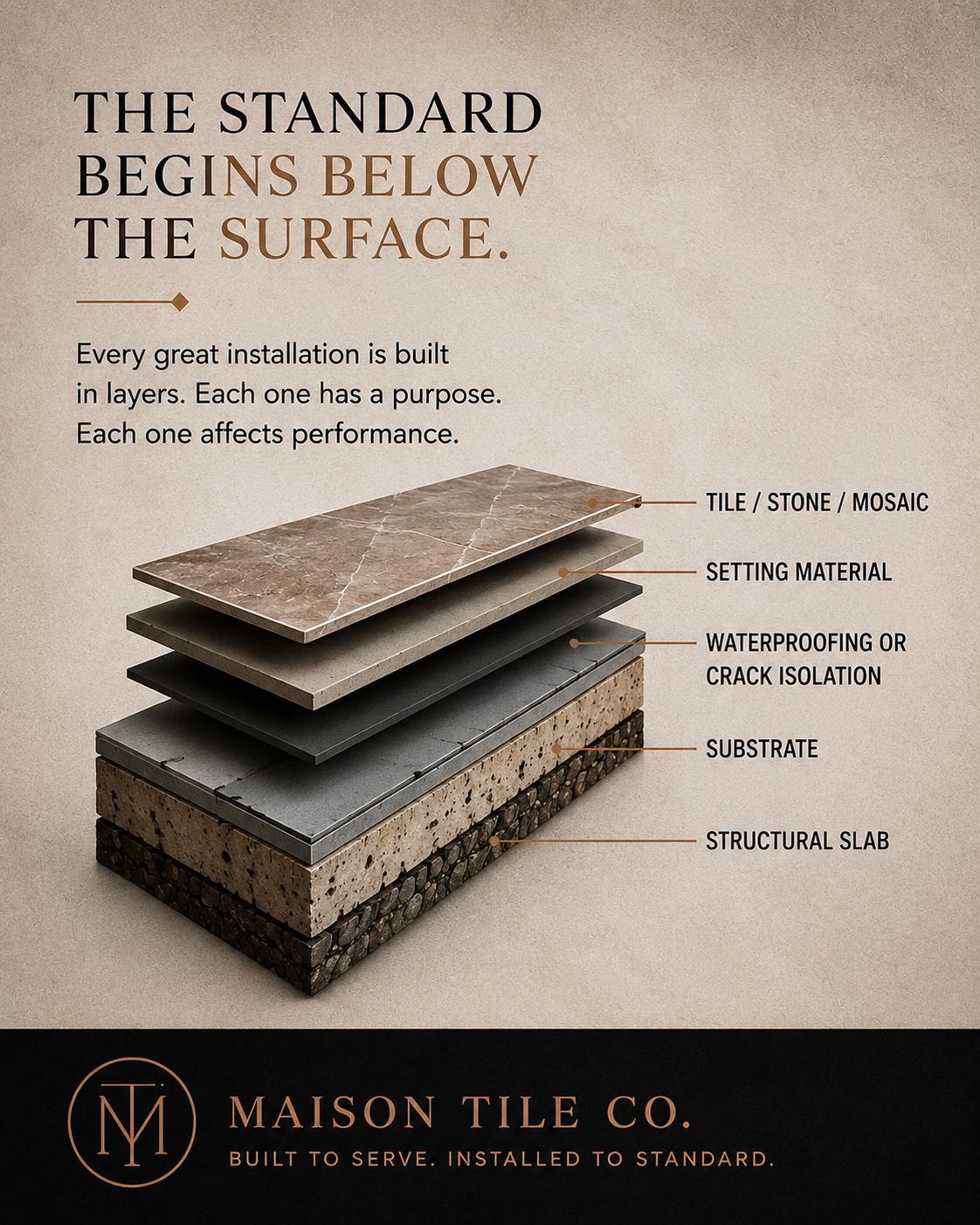
Educational poster 02: The Standard Begins Below the Surface — assembly diagram showing tile, setting material, waterproofing, substrate, and structural slab layers
02

The Standard Begins Below the Surface.

Every great installation is built in layers — tile, setting material, waterproofing or crack isolation, substrate, and structural slab. Each layer has a purpose. Each one affects performance.

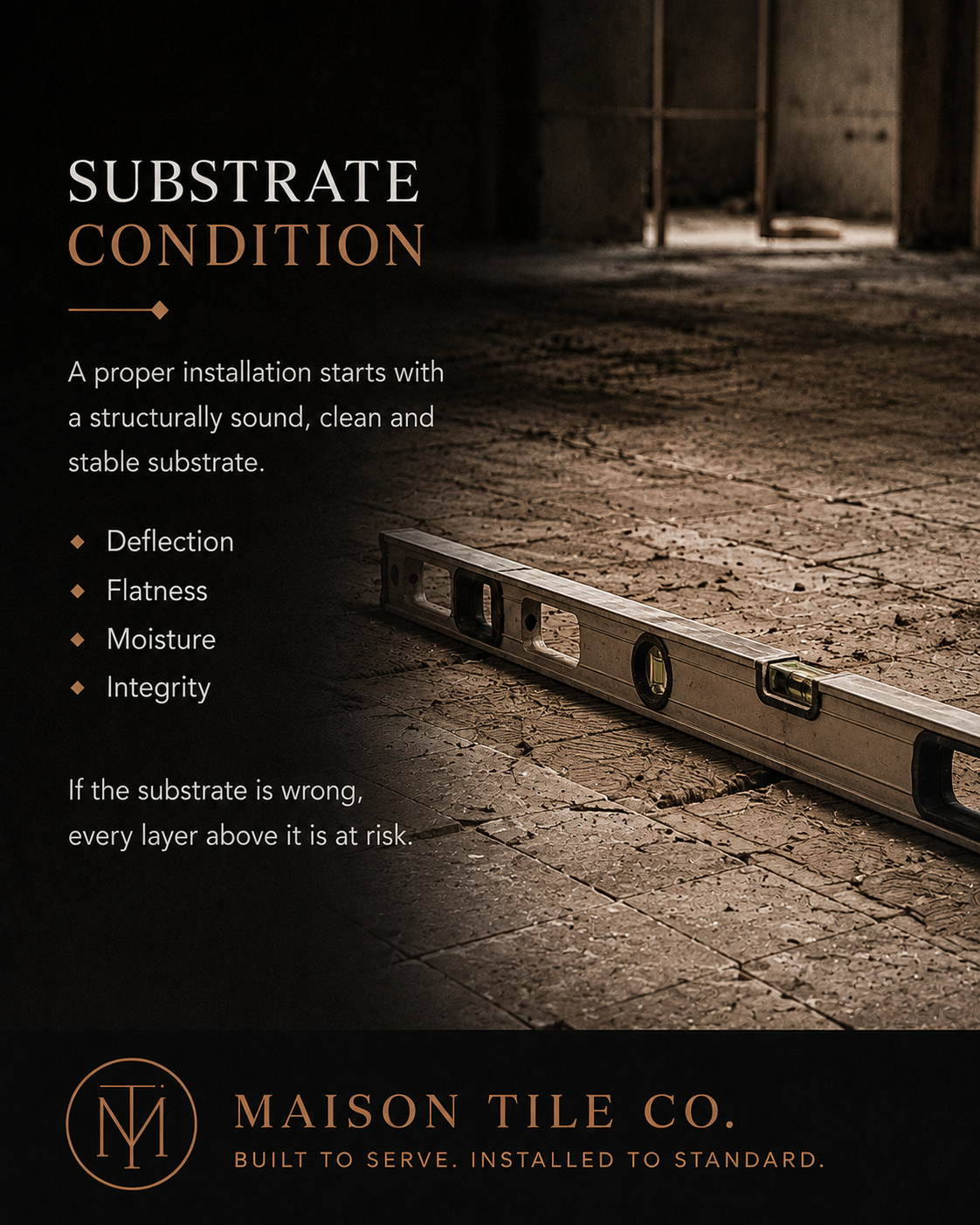
Educational poster 03: Substrate Condition — criteria for evaluating substrate flatness, strength, and moisture before tile installation
03

Substrate Condition

A sound, clean, stable substrate begins with attention to deflection, flatness, moisture, and integrity.

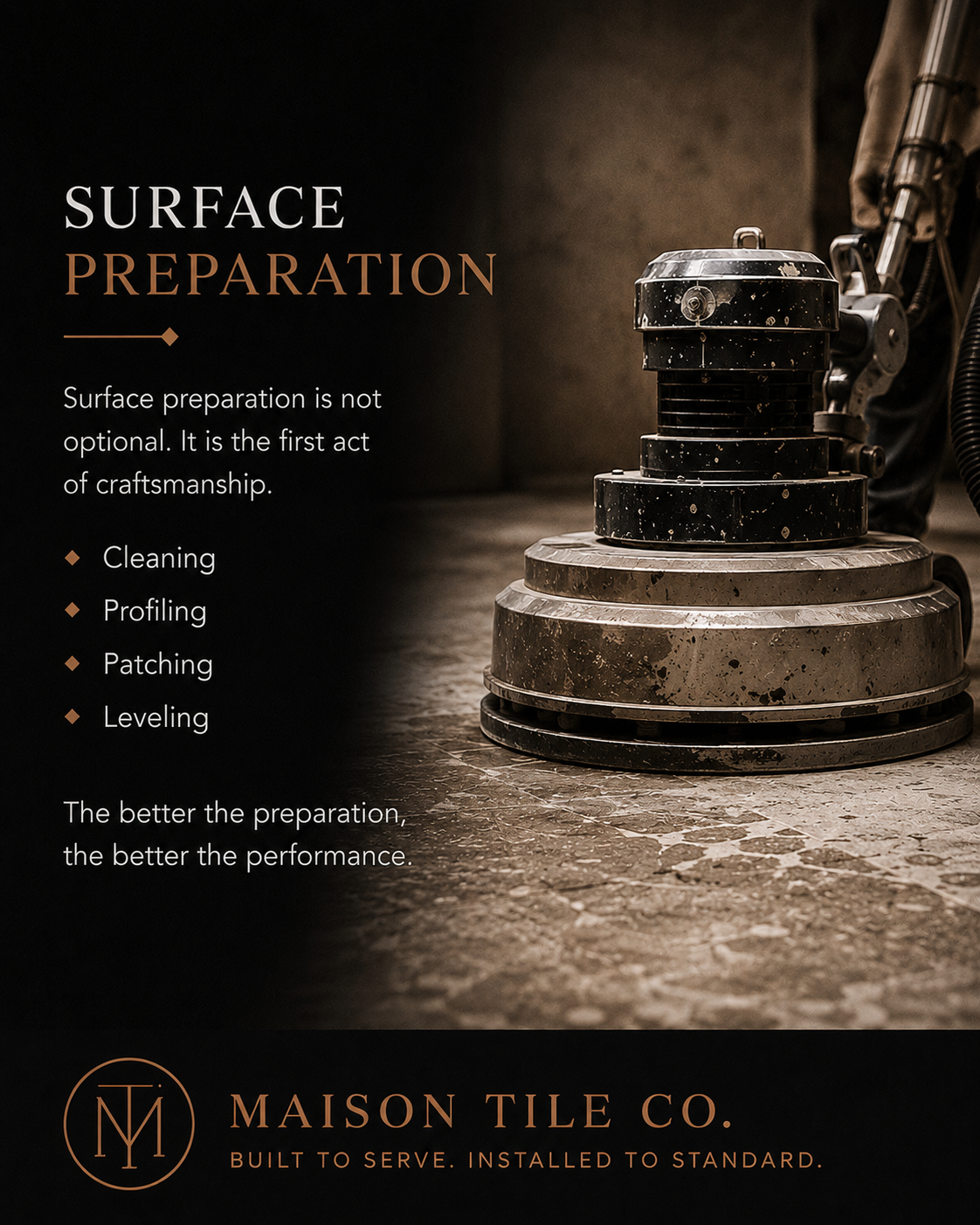
Educational poster 04: Surface Preparation — cleaning, priming, and conditioning the substrate to receive setting materials
04

Surface Preparation

Cleaning, profiling, patching, and leveling prepare the surface for the work ahead.

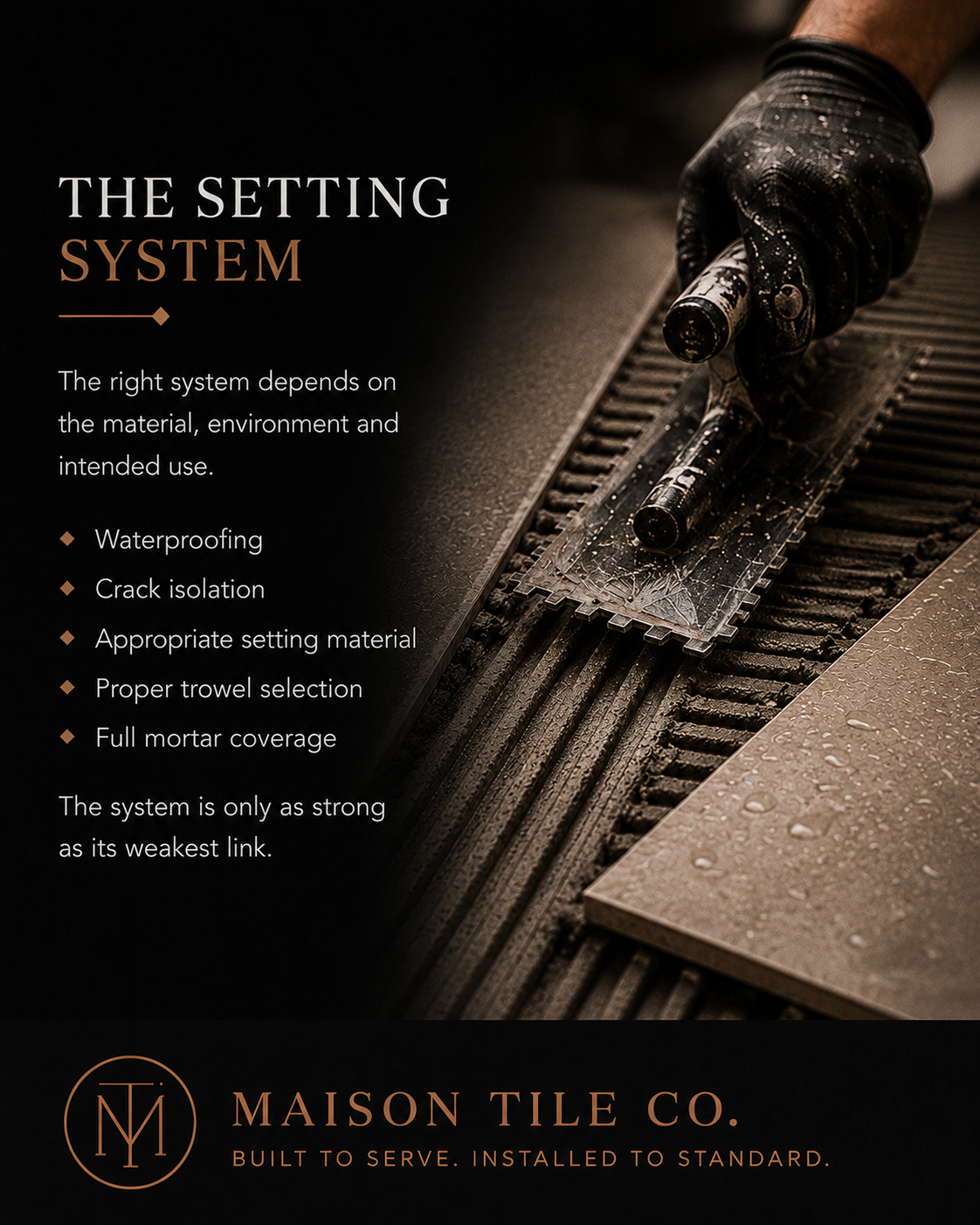
Educational poster 05: The Setting System — mortar selection, coverage requirements, and back-buttering standards for tile installation
05

The Setting System

Material, environment, and intended use guide waterproofing, crack isolation, setting material, trowel selection, and mortar coverage.

Educational poster 06: Installation With Purpose — layout planning, alignment, and execution discipline in commercial tile installation
06

Installation With Purpose

Layout, planning, movement joint placement, detailing, and edge treatment support a clean, consistent installation.

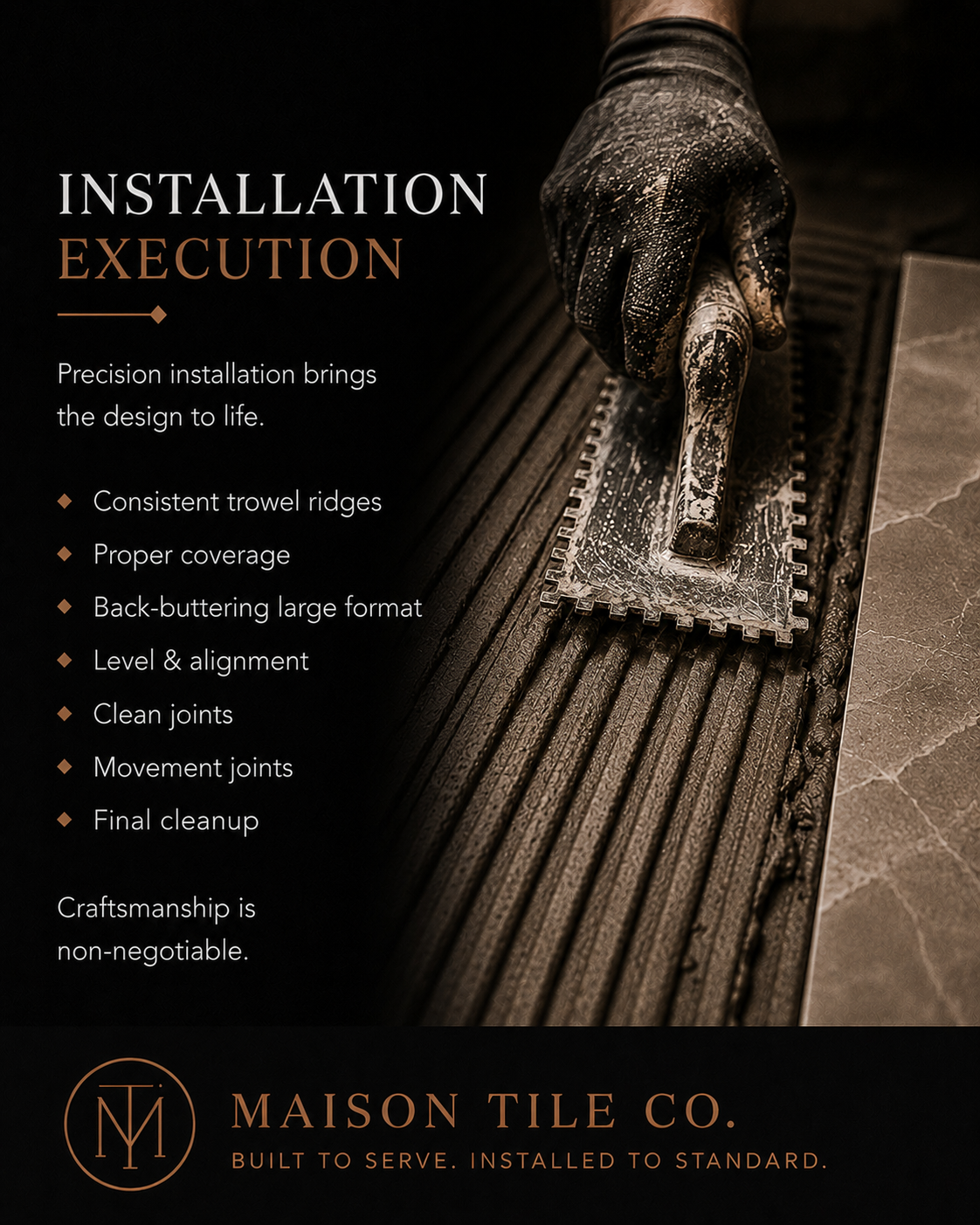
Educational poster 07: Installation Execution — field discipline, lippage control, and workmanship standards during active tile installation
07

Installation Execution

Consistent trowel ridges, coverage, back-buttering, alignment, clean joints, movement joints, and cleanup all matter.

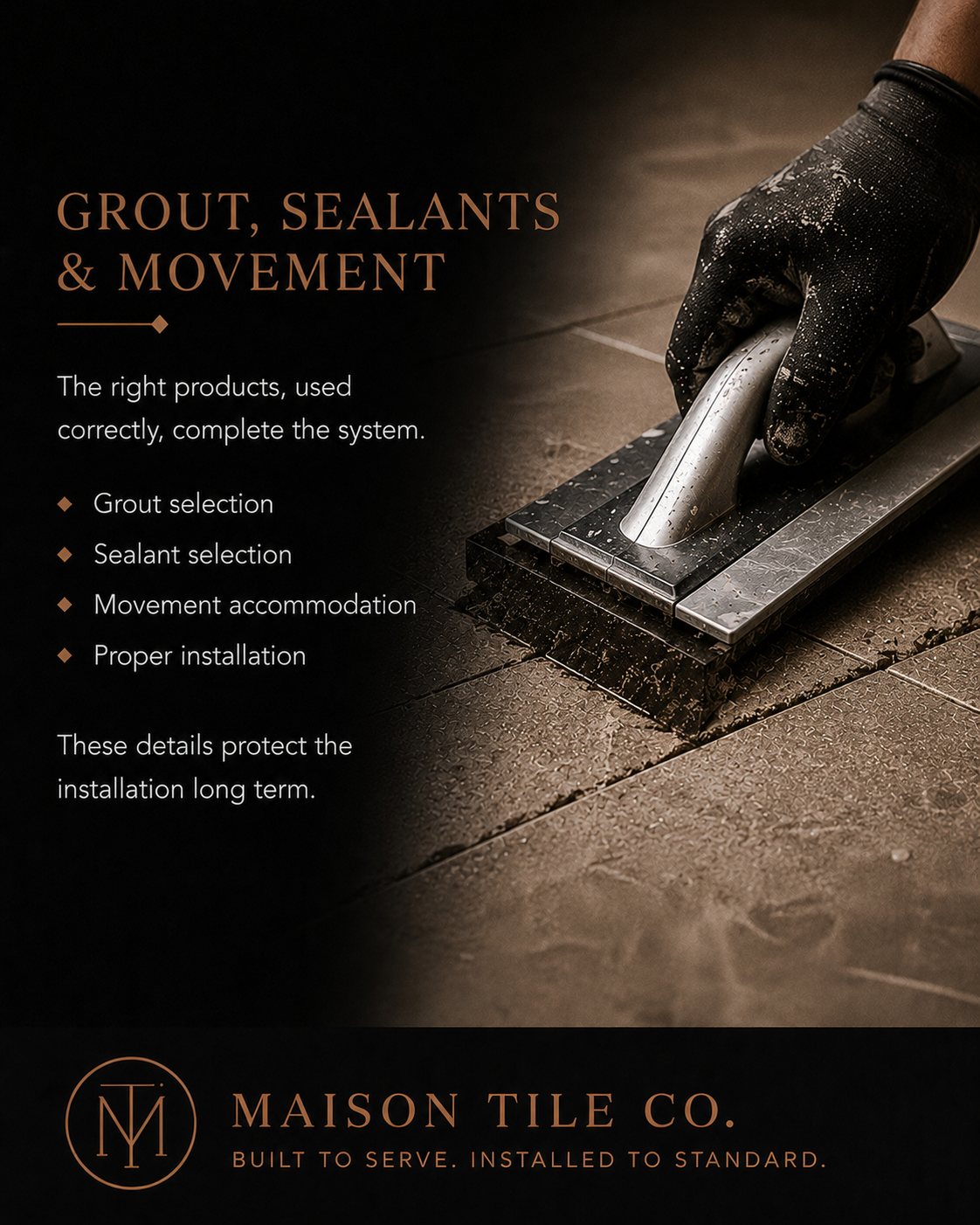
Educational poster 08: Grout, Sealants and Movement — grout selection, joint filling, sealant application, and movement joint placement
08

Grout, Sealants & Movement

Grout selection, sealants, movement accommodation, and proper installation help protect the completed work.

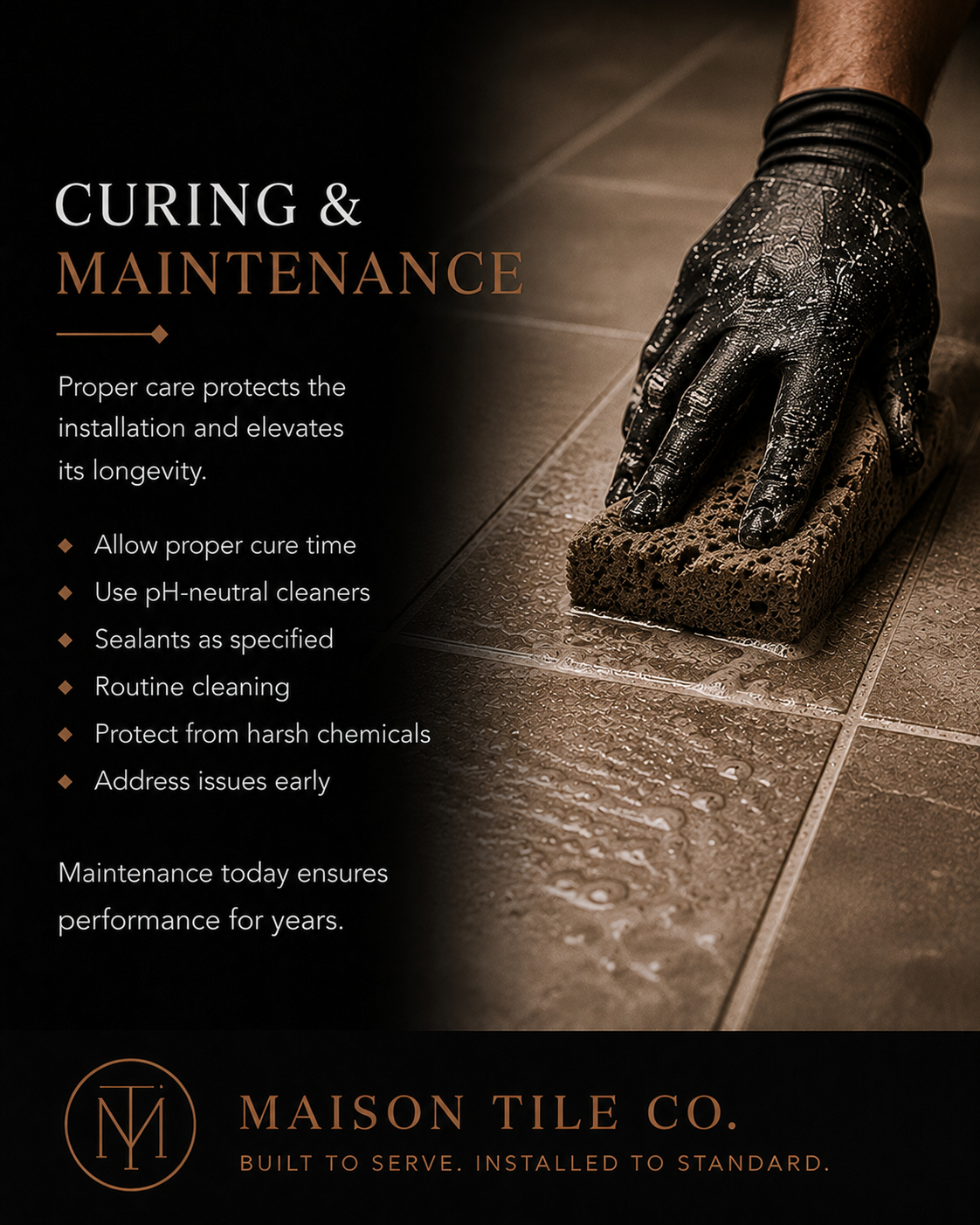
Educational poster 09: Curing and Maintenance — mortar cure time requirements, traffic protection, and post-installation care
09

Curing & Maintenance

Allow proper cure time, follow specified care, use suitable cleaners, and address issues early.

Educational poster 10: Every Detail. Every Layer. Every Time. — Maison Tile Co commitment to consistent installation standards on every project
10

Every Detail. Every Layer. Every Time.

The standard is not applied selectively. Every phase of every installation is executed to the same specification — regardless of project size, schedule pressure, or visibility.

Educational poster 11: Built to Serve. Installed to Standard. — Maison Tile Co mission statement and commitment to the trade
11

Built to Serve. Installed to Standard.

Maison Tile Co brings the full sequence — substrate to finish — to every commercial and institutional project. The standard is not optional. It is the work.

01

Substrate Preparation

ANSI A108.01TCNA Handbook — Substrate Requirements

The substrate must be structurally sound, clean, flat, and free of excessive deflection before any tile work begins. Flatness tolerances and surface preparation requirements vary by substrate type and tile format. Concrete, cement board, gypsum board, and existing tile each require different evaluation and preparation approaches. Maison Tile Co evaluates substrates during preconstruction and documents conditions before mobilization.

Flatness, Level & Slope — Visual Guide →

02

Waterproofing & Membranes

ANSI A118.10ANSI A118.12TCNA W244TCNA B415

Wet areas require a continuous, properly sloped waterproofing membrane installed to the correct height and integrated with drains, curbs, and penetrations. Membrane type — sheet, liquid-applied, or foam — is selected based on the substrate, exposure, and project specification. Flood testing is performed before tile installation in applicable areas.

03

Mortar Beds

ANSI A108.1AANSI A108.1BTCNA F111TCNA W221

A properly floated mortar bed provides a stable, level, and bondable surface for tile installation. Mortar beds are used where substrate conditions require leveling, where slopes must be established, or where the specification requires a traditional installation method. Bed thickness, reinforcement, and curing time are determined by the application and tile format.

Mortar Beds & Backer Board — Visual Guide →

04

Setting Materials

ANSI A118.1ANSI A118.4ANSI A118.6ANSI A118.15

Setting material selection is determined by the substrate, tile type, format, exposure, and project specification. Large-format tile, porcelain, glass, natural stone, and quarry tile each have specific setting material requirements. Thinset mortar, medium-bed mortar, epoxy mortar, and organic adhesive are not interchangeable. Maison Tile Co selects and documents setting materials based on the project specification and manufacturer requirements.

Modified vs. Unmodified Mortar — Visual Guide →

05

Grout

ANSI A118.6ANSI A118.3ANSI A118.7

Grout selection — sanded, unsanded, epoxy, or urethane — is based on joint width, exposure, chemical resistance requirements, and the project specification. Joint width must be consistent and appropriate for the tile format and installation method. Grout is not a structural element; it fills the joint and protects the setting material. Curing and sealing requirements vary by grout type and exposure.

06

Movement Joints

TCNA EJ171ANSI A108.01 Section 3.7ASTM C1193

Movement joints are required at all changes of plane, at structural joints, at perimeters, and at intervals determined by the TCNA and the project engineer. Eliminating or reducing movement joints is a common cause of tile failure. Movement joints must be installed through the full depth of the tile assembly and filled with a compressible sealant — not grout. Maison Tile Co reviews movement joint requirements during preconstruction and coordinates with the GC and architect.

Grout & Movement Joints — Visual Guide →

07

Large-Format Tile

TCNA Handbook — Large Format TileANSI A108.02

Large-format tile requires a flatter substrate, a higher-coverage setting material, and back-buttering to achieve adequate bond. Lippage tolerances are tighter and must be addressed through substrate preparation rather than shimming. Layout planning is critical — large-format tile amplifies substrate defects and installation errors that would be less visible at smaller formats.

08

Natural Stone

TCNA Handbook — Natural StoneMIA+BSI Stone Installation Standards

Natural stone requires setting materials and grouts that are compatible with the stone type. Certain stones — particularly calcareous materials — are sensitive to acidic cleaners and incompatible setting materials. Resin-backed stone, thin stone, and gauged stone panels each have specific installation requirements. Maison Tile Co reviews stone type and specification requirements before mobilization.

09

Mosaics

ANSI A108.02TCNA Handbook — Mosaic Tile

Mosaic tile — glass, ceramic, porcelain, or stone — requires a setting material appropriate for the tile type and a substrate that is flat enough to prevent lippage across the sheet. Back-mounted, face-mounted, and paper-mounted mosaics each have different installation sequences. Grout joint width and setting material selection are determined by the mosaic type and the project specification.

10

Heated Floors

TCNA Handbook — Heated FloorsManufacturer installation requirements

Radiant heat systems installed beneath tile require setting materials rated for thermal cycling. The heating element must be embedded in a compatible mortar bed or setting material, and the system must be tested before and after tile installation. Maison Tile Co coordinates with the mechanical contractor and reviews the system specification before installation.

11

Exterior & Freeze-Thaw

TCNA Handbook — Exterior ApplicationsANSI A108.01 Section 3.7

Exterior tile installations are subject to freeze-thaw cycling, thermal expansion, and moisture exposure that interior installations are not. Tile selection, setting material, grout, and movement joint design must all account for exterior exposure. Impervious tile, exterior-rated setting materials, and properly designed movement joints are required. Maison Tile Co reviews exterior specifications carefully — exterior failures are expensive and difficult to repair.

12

Cleaning & Protection

TCNA Handbook — MaintenanceManufacturer care requirements

Tile and grout must be cleaned and protected during and after installation. Cleaning methods and products must be appropriate for the tile and grout type — the wrong cleaner can damage the surface or the joint. Sealers are required for certain grout types and natural stone. Maison Tile Co provides maintenance and care instructions as part of the closeout package.

A Note on Standards

The standards referenced on this page are published by ANSI, TCNA, and ASTM. They represent minimum requirements, not maximums. Project specifications may require more stringent standards. Maison Tile Co reviews the project specification and applicable standards during preconstruction on every project.

Questions About the Specification?

Send us the scope and specification. We'll review the technical requirements and respond with what you need.